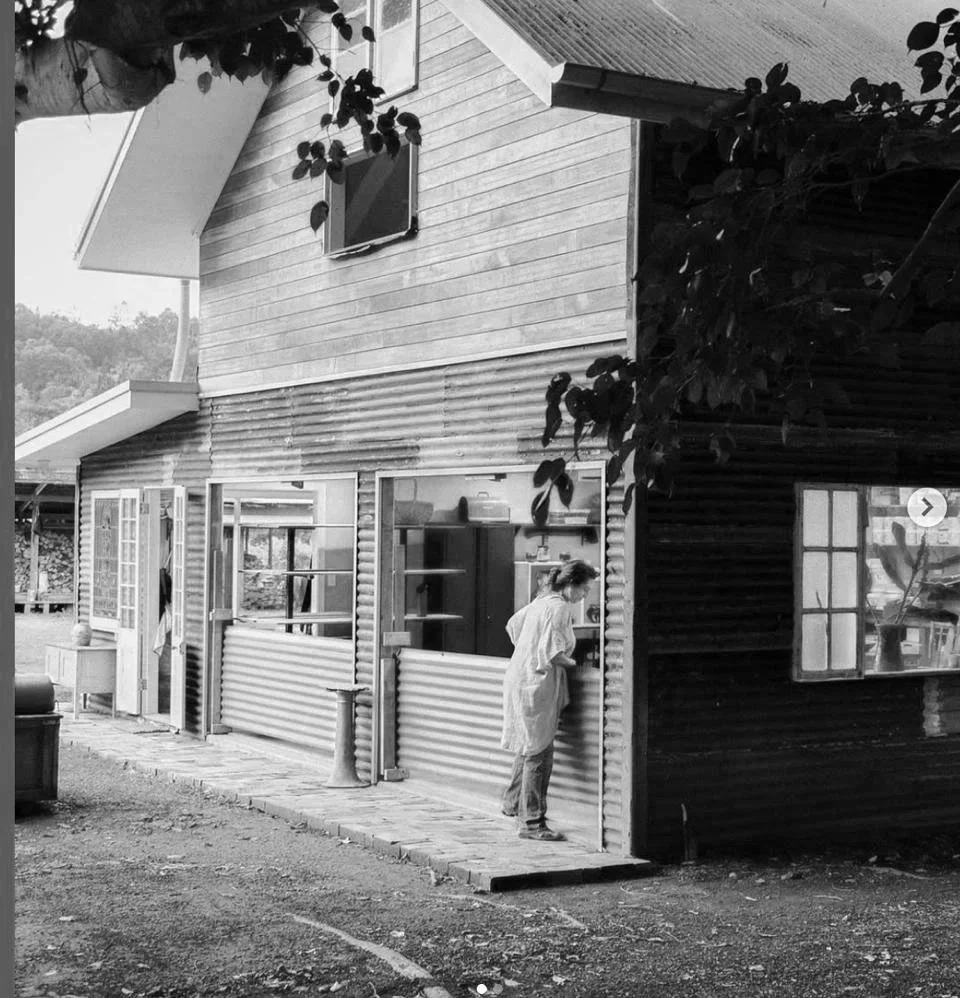
WOOD FIRING AT MIDDLE POCKET POTTERY
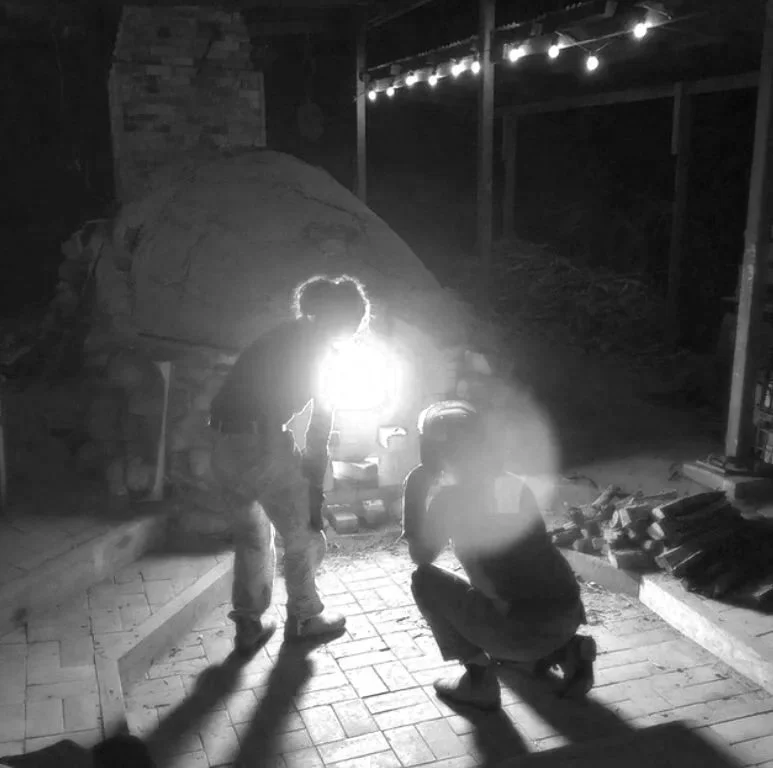
Group firings offer a unique opportunity to take part in an Anagama firing from start to finish. Participants are guided through each stage of the process, from preparing wood and selecting clay bodies to exploring forms and surfaces, packing the kiln, and tending the fire during its 100+ hour burn.
These immersive firings ground participants in the alchemy of this ancient craft, combining patience, community & discovery in a truly transformative experience.
WORKSHOP SCHEDULE
DAY 1 – 2
timber identification, wood collection, splitting, stacking & storage
discussions on clay bodies, forms & glazing
make kiln wash, glazes, wadding & cone packs
DAY 3 – 5
glazing guidance, wadding application & kiln preparation
kiln packing - pot preparation, wadding & placement in the kiln
individual rostered packing times with support from an experienced firer
DAY 6 – 9
100 hour firing, including at least 3 firing shifts per participant
roster is created in consultation with each participant’s availability
DAY 10 – 11
kiln unpacking
group debrief & discussion of firing results
final kiln assessment, analysis & reset
Sign up for our newsletter & be the first to find out about our future firings, open studios & latest collection from the kiln.
MEET THE TEAM
Jo works across a range of scales, from finely crafted porcelain vessels to large stoneware forms & site-specific installations. Jo’s practice is grounded in a deep understanding of form, proportion & space. Her work is recognised for the way surface & texture are integral to each piece.
Wood firing is central to her creative process. After assisting in the build of the Anagama kiln at Middle Pocket Pottery , Jo has continued to explore the dynamic potential of flame, ash & time to transform the surfaces of her work.
Jo draws from traditional hand-building techniques while adapting them to a contemporary context, believing that tradition is not fixed in the past, but alive, evolving & open to transformation in the present.
JO NORTON
ANDREW ZANETTE
Andrew has been experimenting in ceramics for close to 15 years.
Andrew first wood fired at La Meridiana in Tuscany, Italy under the tutelage of Tony Clennell (Canada). Andrew has studied with & is influenced by artists such as Simon Levin (USA) & John Dix (USA/Japan). Andrew has an eye for detail & makes highly considered work with an intent on creating luxury objects.
Andrew has been firing with Venessa since 2020.
SARA GONZALEZ
Sara creates vessels that balance refined, minimalist forms with raw, tactile surfaces. Her practice is grounded in an intuitive connection to material & a fascination with the interplay between control and unpredictability in the firing process.
Rooted in tradition but responsive to contemporary contexts, her work explores how elemental forces leave their trace. Inviting contemplation through surface, form & the quiet presence of handmade objects.
She has deepened her knowledge of flame, ash & kiln dynamics through collective firings & mentorship at Middle Pocket Pottery.
WHAT YOU’LL LEARN…
-
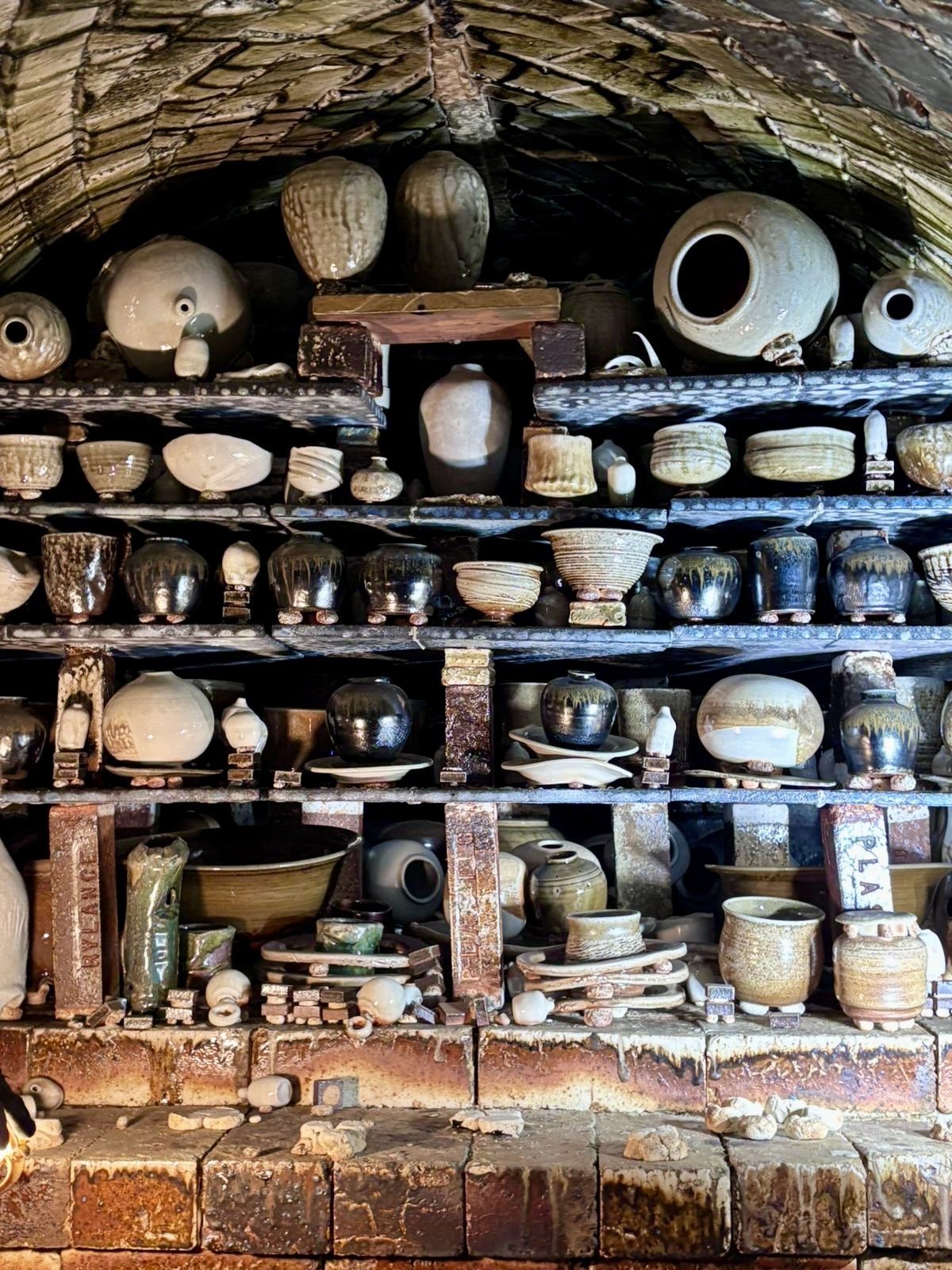
Preparing for a woodfiring involves meticulous planning, including chopping and cleaning wood (if required), bisque firing works, glazing, making wadding, and organising pieces for loading. The kiln is then carefully stacked, ensuring each participant gets their work into the various areas of the kiln and that the work is balanced to allow optimal airflow and flame movement, with wadding placed beneath every piece to prevent them sticking to the kiln shelves.
-
Firing the Anagama kiln is an intense and collaborative process, lasting 80–84 hours non-stop, with participants working in shifts to maintain and control the fire. Each shift involves carefully monitoring temperature fluctuations, strategically stoking the kiln with wood, and ensuring an even distribution of heat and flame throughout the chamber.
-
Unloading the kiln is a highly anticipated moment, taking place once the temperature has cooled to below 50°C, usually seven days after firing. Carefully removing each piece, participants witness the unique effects of the flame and ash, revealing the rich textures and surfaces created by the firing process. This stage is both reflective and rewarding, as the results of the intense labour and collaboration are finally unveiled.
Woodfiring FAQs
-
Wood firing is a traditional ceramic firing method that uses wood as the sole fuel source. The process can take several days and results in unique, natural surface effects created by the interaction of flame, ash, and heat.
-
The entire process, from preparation to unloading, spans several weeks. The firing itself typically lasts between 80–84 hours, followed by a week-long cooling period before the kiln is unloaded.
-
Various types of wood-fired kilns exist, including Anagama, Noborigama, and Bourry Box kilns. The Anagama kiln, a single-chamber design with a continuous stoking process, is particularly known for its rich surface effects.
-
Unlike electric or gas kilns, wood-fired kilns require constant monitoring and stoking to maintain the necessary temperature and atmosphere. The extended duration allows for the accumulation of ash and flame effects that give wood-fired ceramics their distinctive character.
-
The type of wood varies depending on location and availability, but common choices include pine, hardwoods, and fruitwoods. Different woods produce varying ash deposits and flame patterns, influencing the final surface of the ceramics.
-
Wadding is a mixture of refractory materials placed beneath each ceramic piece to prevent it from fusing to kiln shelves or other works during firing. It helps maintain spacing and ensures airflow throughout the kiln.
-
Preparation includes bisque firing pieces, chopping and organising wood, making wadding, and carefully planning the kiln load to optimise air and flame flow. This stage is crucial for a successful firing.
-
Since wood firings run continuously for several days, participants take shifts to monitor and stoke the kiln. Shifts typically last several hours and involve loading wood, checking temperature, and adjusting stoking rhythms as needed.
-
The combination of prolonged exposure to flame, ash accumulation, and varying oxygen levels creates unpredictable textures, glaze-like effects, and natural colour variations, making each piece one of a kind.
-
Once the firing is finished, the kiln is left to cool slowly over approximately seven days. Only after the temperature drops below 50°C can the kiln be safely unloaded, revealing the final results of the firing.
-
Unlike gas or electric kilns, which provide controlled and uniform heat, wood firing introduces natural variations in temperature and atmosphere. The direct interaction between fire and clay produces organic, unrepeatable surfaces.
-
Wood firing can be environmentally conscious when using sustainably sourced wood, deadfall, or reclaimed materials. Many wood-firing communities prioritise ethical sourcing and efficient firing practices to minimise waste.